An Introduction
Pastor Brent Summerhill
Paul’s letter to the church at Colossae is one of his shortest. But it is theologically packed and as practically relevant in the twenty-first century as it was in the first century.
Paul was thankful for the faith and love of this young church (Colossians 1:3-7). However, as the letter unfolds, he is also concerned that the church might be led astray from Christ alone. He wants the saints to see and savor Jesus.
Always. Only. Jesus.
The Place
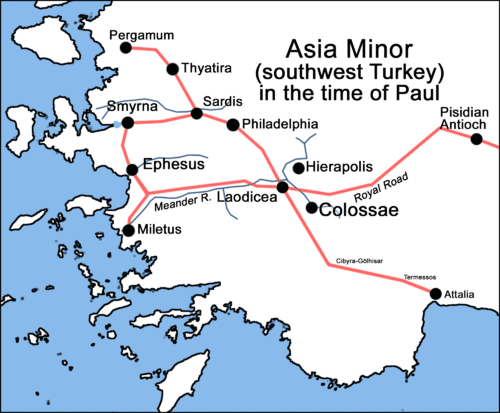
Colossae was a town on the banks of the river Lycus in south-east Asia Minor, the region known today as Turkey. It was about 100 miles east of Ephesus. Once a prosperous and affluent city known for wool and dyeing, by the time of Paul it was less significant. The cities of Laodicea (10 miles away) and Hierapolis (6 miles away) had become the larger centers of commerce and population.
It is questionable as to whether Paul ever visited Colossae. He may have passed through the city some years before given that the Lycus and Meander valleys provided a natural route from Galatia to Ephesus (Acts 18:23), but the church appears to have been founded by Epaphras (Colossians 1:6-7).
The Issue
As in other cities of Rome during that era, Colossae would have been a mixture of religions and philosophies from the classical Greek gods to ‘mystery religions’ promising entrance to a secret exclusive higher world to various ancient cultus. One issue for the young church would have been syncretism, the mixing of all these religious teachings, practices, and philosophies with Christianity.
Another issue for the church would have been the influence of Judaism. There was a substantial Jewish minority living in the Lycus valley. It is estimated that two or three thousand Jews may have been living in Colossae during this time.1
It is likely that as elsewhere, such as in the churches of Galatia, followers of Judaism were trying to convince young Gentile converts to Christianity that their faith in Christ was incomplete. They would have insisted that acceptance by God also required adherence to special diets, holy days, and festivals (Colossians 2:16). Between the paganism and Judaism, it is understandable how the young believers’ minds could get muddled and dangerously drift from Christ alone.
Paul’s Answer
Paul’s answer to the issue in the Colossian church was to exalt and exult in Jesus. The single paragraph encompassing verses 1:14-20 is dense with doctrine of and delight in the Deity and preeminence of Jesus. And verses 21-23 that follow resonate with the reconciling work of Jesus “in his body by his death” to not only reclaim us but remake us for eternity with Him.
Paul leaves no doubt by the end of the letter that Jesus is all we need for salvation and for life.
I need no other argument,
I need no other plea,
It is enough that Jesus died,
And that he died for me.2
Always. Only. Jesus.
1Dunn, J. D. G. (1996). The Epistles to the Colossians and to Philemon: a commentary on the Greek Text (p. 22). William B. Eerdmans Publishing; Paternoster Press.
2Lidie H. Edmunds, My Faith Has Found a Resting Place.
Paul was thankful for the faith and love of this young church (Colossians 1:3-7). However, as the letter unfolds, he is also concerned that the church might be led astray from Christ alone. He wants the saints to see and savor Jesus.
Always. Only. Jesus.
The Place
Colossae was a town on the banks of the river Lycus in south-east Asia Minor, the region known today as Turkey. It was about 100 miles east of Ephesus. Once a prosperous and affluent city known for wool and dyeing, by the time of Paul it was less significant. The cities of Laodicea (10 miles away) and Hierapolis (6 miles away) had become the larger centers of commerce and population.
It is questionable as to whether Paul ever visited Colossae. He may have passed through the city some years before given that the Lycus and Meander valleys provided a natural route from Galatia to Ephesus (Acts 18:23), but the church appears to have been founded by Epaphras (Colossians 1:6-7).
The Issue
As in other cities of Rome during that era, Colossae would have been a mixture of religions and philosophies from the classical Greek gods to ‘mystery religions’ promising entrance to a secret exclusive higher world to various ancient cultus. One issue for the young church would have been syncretism, the mixing of all these religious teachings, practices, and philosophies with Christianity.
Another issue for the church would have been the influence of Judaism. There was a substantial Jewish minority living in the Lycus valley. It is estimated that two or three thousand Jews may have been living in Colossae during this time.1
It is likely that as elsewhere, such as in the churches of Galatia, followers of Judaism were trying to convince young Gentile converts to Christianity that their faith in Christ was incomplete. They would have insisted that acceptance by God also required adherence to special diets, holy days, and festivals (Colossians 2:16). Between the paganism and Judaism, it is understandable how the young believers’ minds could get muddled and dangerously drift from Christ alone.
Paul’s Answer
Paul’s answer to the issue in the Colossian church was to exalt and exult in Jesus. The single paragraph encompassing verses 1:14-20 is dense with doctrine of and delight in the Deity and preeminence of Jesus. And verses 21-23 that follow resonate with the reconciling work of Jesus “in his body by his death” to not only reclaim us but remake us for eternity with Him.
Paul leaves no doubt by the end of the letter that Jesus is all we need for salvation and for life.
I need no other argument,
I need no other plea,
It is enough that Jesus died,
And that he died for me.2
Always. Only. Jesus.
1Dunn, J. D. G. (1996). The Epistles to the Colossians and to Philemon: a commentary on the Greek Text (p. 22). William B. Eerdmans Publishing; Paternoster Press.
2Lidie H. Edmunds, My Faith Has Found a Resting Place.